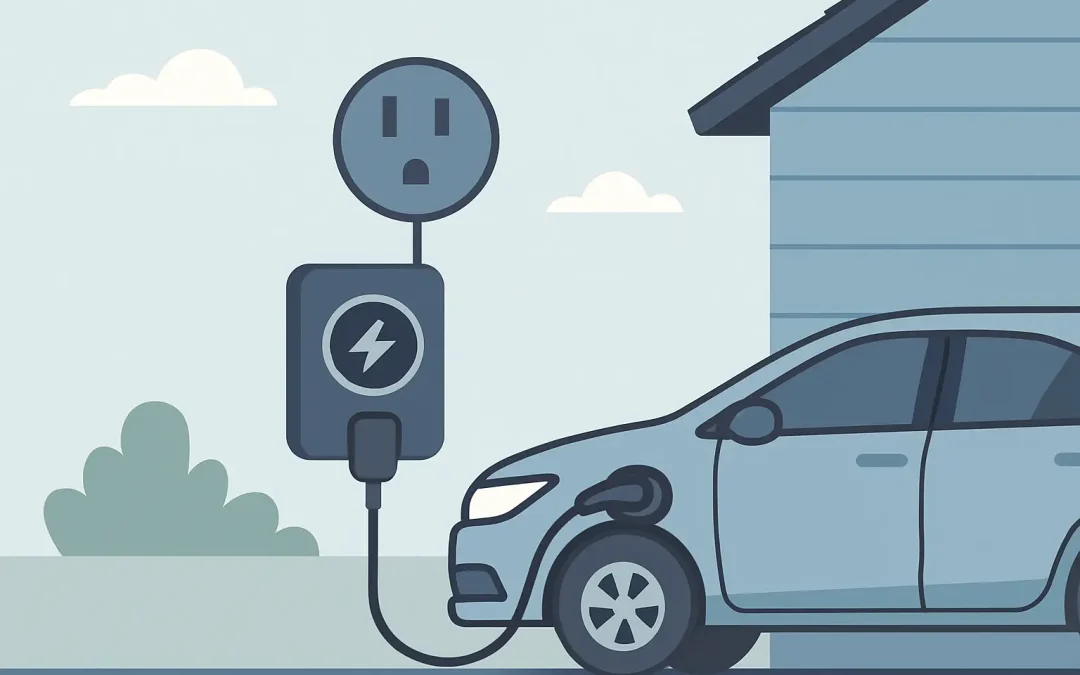
Your EV is parked. The battery is low. You plug into a regular 120V outlet and the estimate jumps to “tomorrow.” That is the moment most Inland Empire drivers start looking at Level 2 charging – and it usually starts with one question: should you install a 240V outlet for EV charging, or hardwire a charger?
A 240V setup is often the sweet spot for speed, flexibility, and cost. But it is also real electrical infrastructure. Done right, it is safe, code-compliant, and dependable for years. Done wrong, it can mean nuisance breaker trips, overheated wiring, or an outlet that degrades under daily high load.
When a 240V outlet makes sense for an EV
If your daily driving routinely uses more than what you can comfortably replenish overnight on 120V, a 240V circuit is the practical answer. A typical Level 1 setup might add only a handful of miles per hour. A Level 2 setup can add many times that, depending on the charger and vehicle.
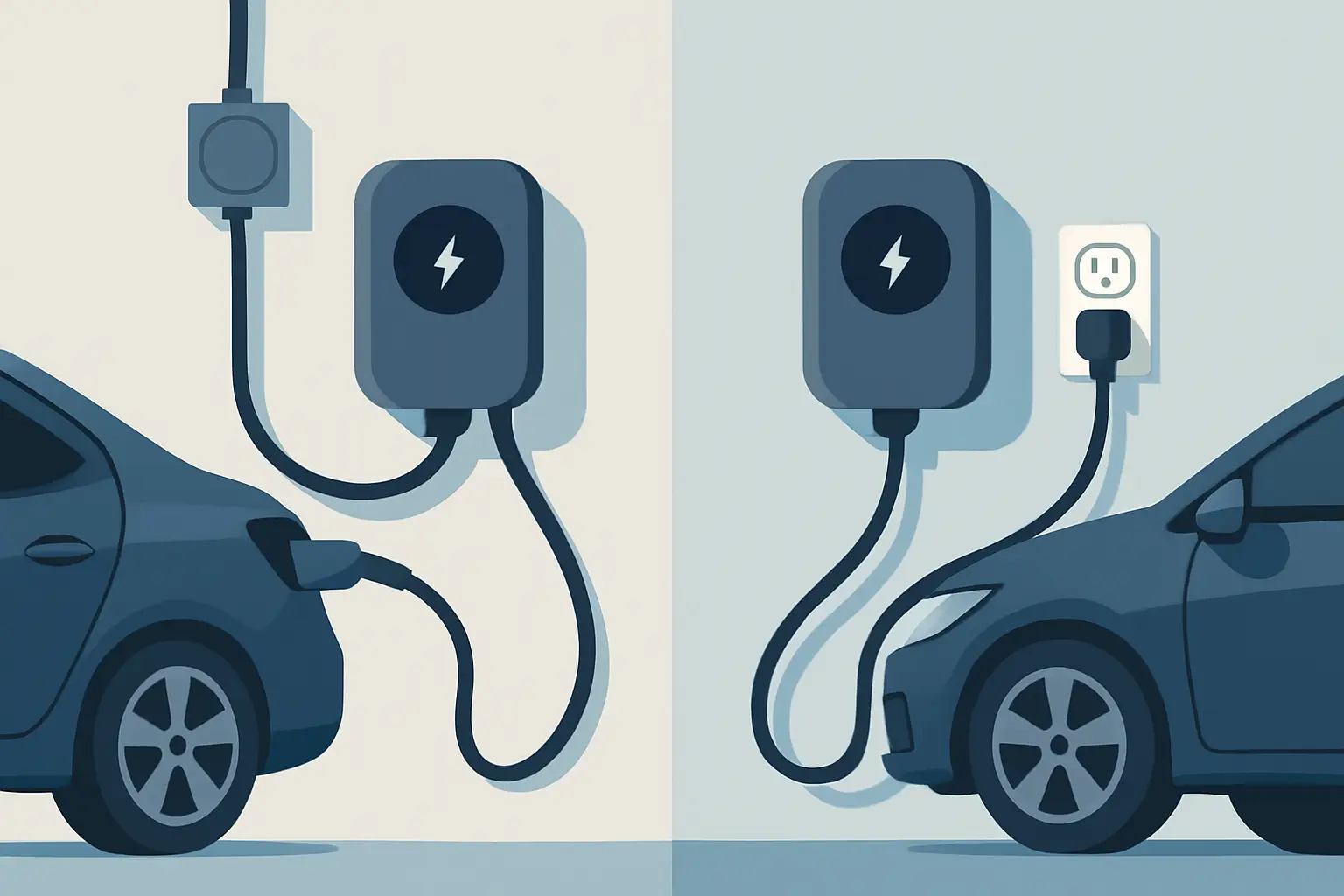
A 240V outlet also makes sense when you want flexibility. Many EV owners like using a plug-in charger so they can replace it easily, take it to a new home, or swap to a different amperage later. Others prefer a hardwired wall charger for a cleaner look and one less point of failure. It depends on your goals, where the charger will live, and what your panel can support.
Outlet vs hardwired charger: the trade-offs
A plug-in EV charger uses a receptacle, most commonly a NEMA 14-50 or NEMA 6-50. Hardwired chargers connect directly to a dedicated circuit without an outlet.
Plug-in is attractive because it is straightforward to replace the charger, and it can be a little faster to get installed when the layout is simple. The trade-off is that outlets and plugs are wear items. Continuous high current can loosen connections over time if the receptacle is not commercial-grade or if the wiring terminations are not torqued correctly.
Hardwired is often the most durable long-term choice, especially for higher amperage charging. There is no plug to heat up, and many jurisdictions and manufacturers treat hardwired as the preferred method at 48A and above. The trade-off is less flexibility. If you change chargers, an electrician typically needs to re-terminate conductors.
If you are not sure, an electrician can help you pick based on your vehicle, your driving pattern, and the electrical capacity available.
What “install 240v outlet for ev” really involves
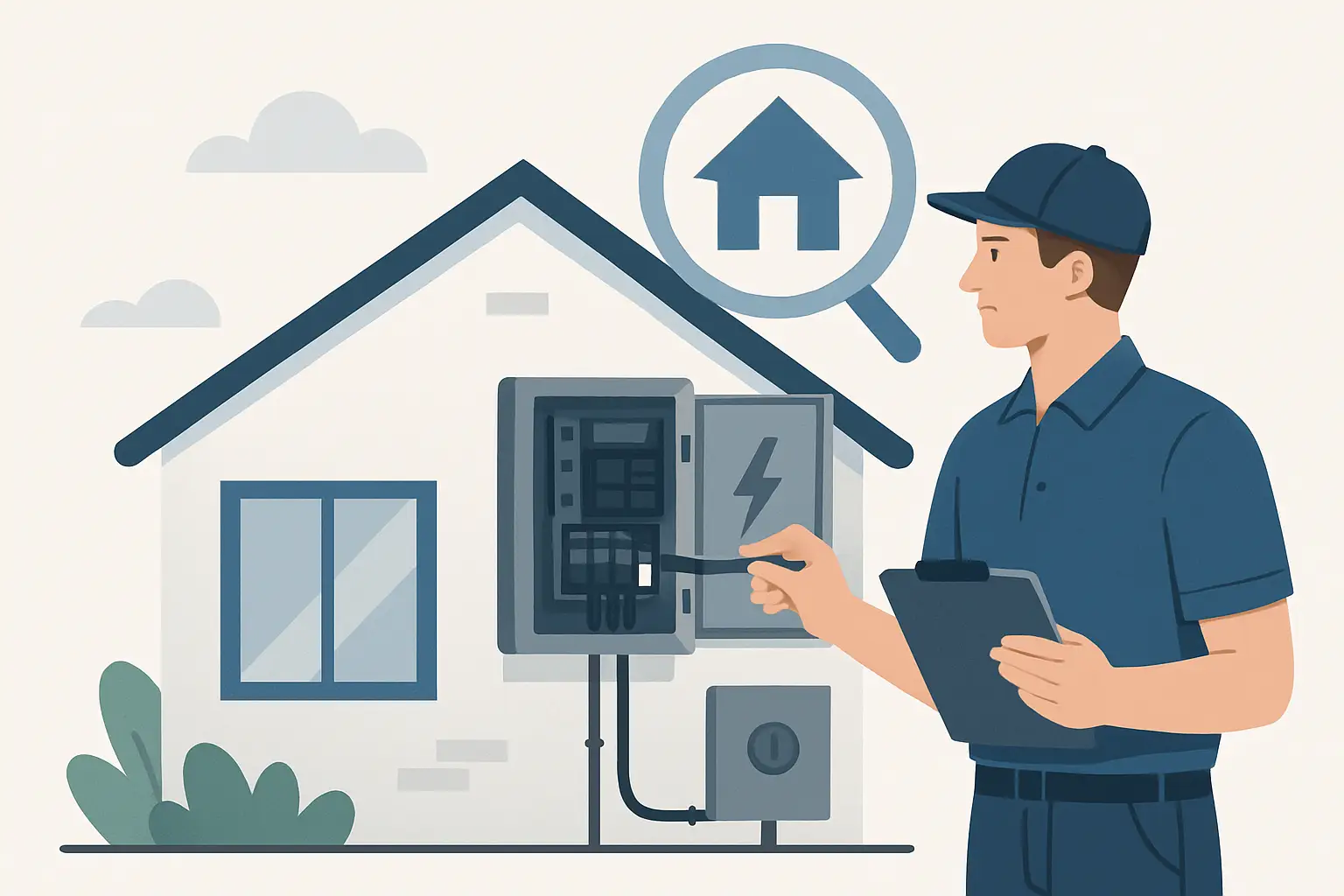
Homeowners often picture “adding an outlet.” In reality, EV charging is closer to adding a small appliance circuit that runs for hours at a time. The work generally includes evaluating your existing service and then building a dedicated branch circuit designed for continuous load.
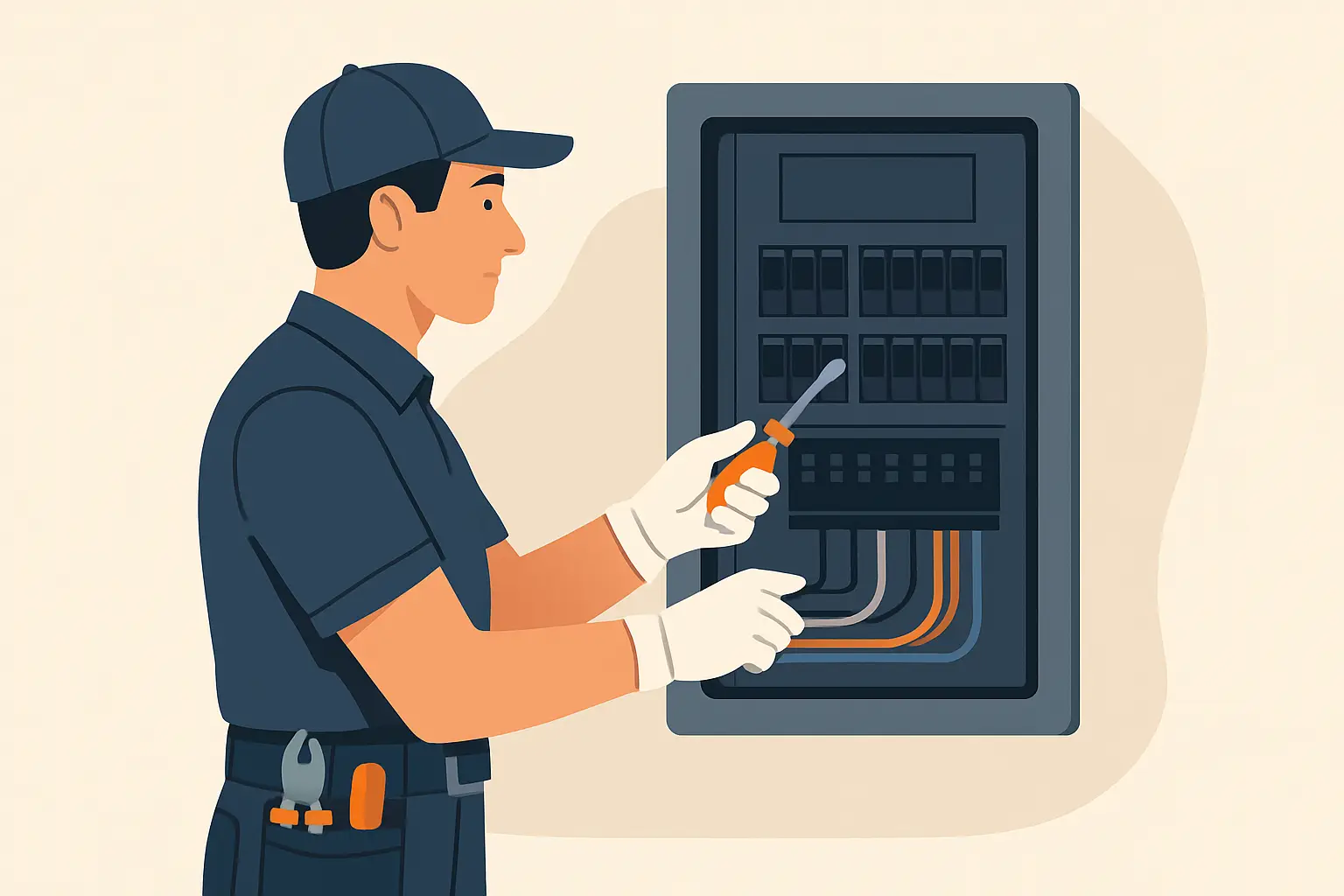
At a high level, the job includes a load calculation, selecting the right breaker size, running correctly sized wire, choosing a suitable receptacle (if plug-in), installing an enclosure or box that fits the environment, and verifying grounding and bonding. Then it is tested under load and labeled properly.
Because EV charging is a continuous load, the circuit has to be sized accordingly. That is one reason DIY or “handyman electrical” can get people into trouble: the system might work on day one, but it is not designed for daily thermal stress.
The most common 240V outlet types for EV charging
Most EV owners hear “NEMA 14-50” first, and for good reason. It is widely supported by many plug-in Level 2 chargers and is common in garages.
A NEMA 14-50 is a 4-prong outlet that includes two hot legs, a neutral, and a ground. Some EV chargers do not use the neutral, but the configuration can still be useful depending on future needs.
A NEMA 6-50 is another option. It is a 3-prong outlet with two hots and a ground. It is common for welders and is used by some EV charging equipment. In some installs, it can be simpler because it does not require a neutral conductor.
Which is “best” depends on your charger, the planned amperage, and what you want for future flexibility. What matters most is not the face of the outlet – it is the circuit behind it: properly sized conductors, correct breaker, and quality terminations.
Can your electrical panel handle it?
This is where the job gets real. Many Inland Empire homes can support Level 2 charging with no major changes. Others are already near capacity due to electric dryers, ovens, HVAC, pool equipment, and newer additions like heat pumps.
A proper load calculation answers the question: do you have enough capacity to add a dedicated 240V EV circuit without overloading the service? If not, there are still options. Sometimes the solution is a panel upgrade. Other times it is a subpanel, a rearrangement of circuits, or a smart load management device that controls charging when other loads are high.
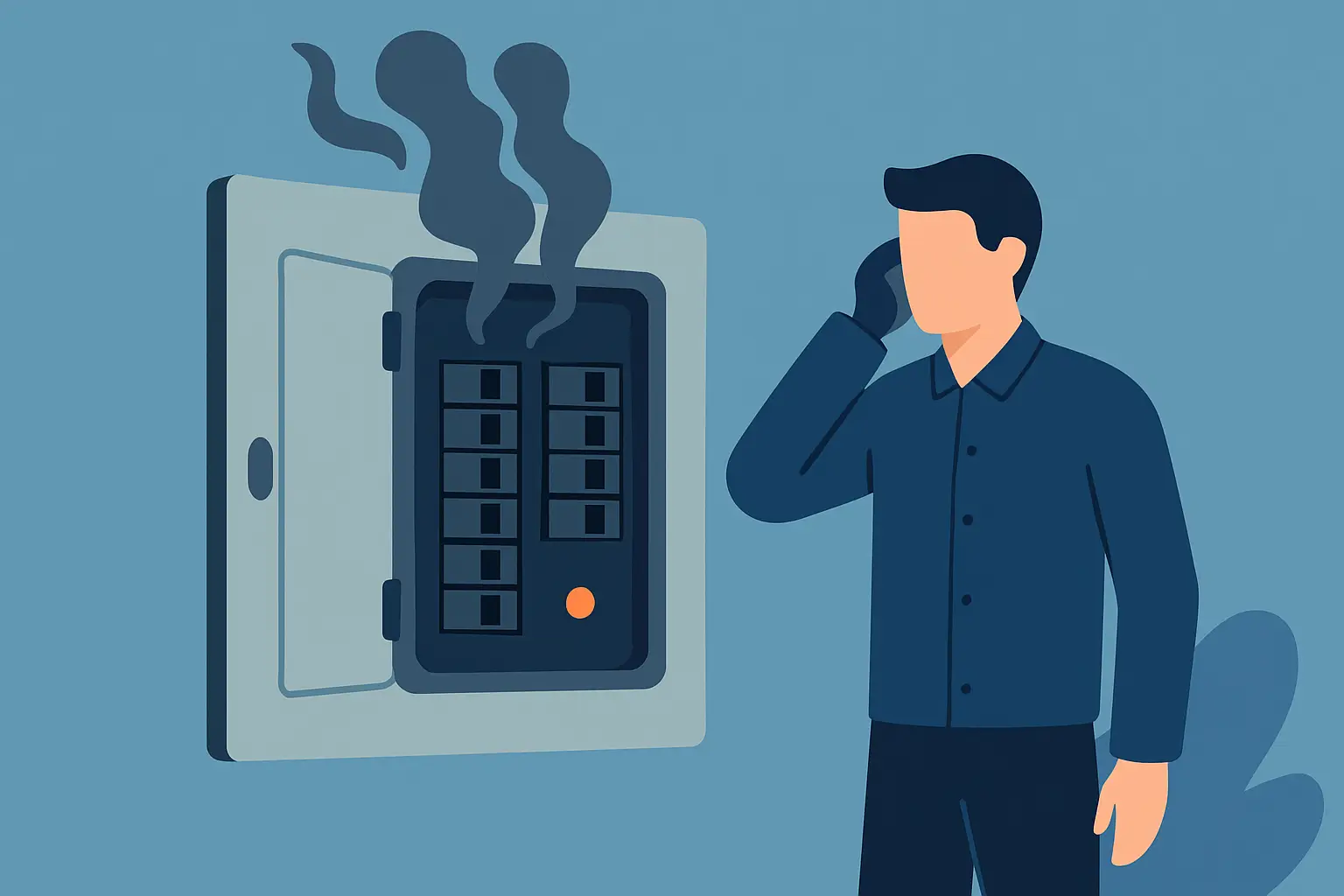
If you have an older panel, signs like crowded breakers, double-tapped conductors, warm cover plates, or frequent trips are a signal to slow down and get the infrastructure evaluated before adding EV charging.
Where the outlet goes matters more than people think
Most people want the outlet near the front of the garage. That is reasonable, but the best location depends on how you park, where the charge port is, and how the cable will route without becoming a trip hazard.
Outdoor installs are also common in Rancho Cucamonga and across the Inland Empire, especially for driveways or side yards. Outdoor locations bring additional requirements – weather-rated enclosures, appropriate conduit, proper mounting height, and protection from physical damage.
Distance from the panel also affects cost and complexity. A long run across an attic or around the home can require more labor and materials. Sometimes relocating the charger location by a few feet saves significant work while still being convenient.
Permits, inspections, and code compliance
A permitted install protects you. It creates a record that the work was designed and installed to current standards and inspected for safety. It also reduces risk when selling a home and can matter for insurance claims.
EV charging touches multiple code considerations: continuous load sizing, conductor sizing, breaker selection, GFCI requirements for certain receptacles, and proper support and protection of wiring methods. These requirements change over time, and local enforcement can vary.
If a contractor suggests skipping the permit to “save time,” that is usually a red flag. A professional approach keeps the project clean, documented, and defensible.
What it typically costs to install a 240V outlet for EV charging
Pricing depends on your panel capacity, the distance to the install location, and whether the work is a straightforward surface conduit run or a more complex route through finished walls.
A simple garage install close to the panel is usually the most affordable. Costs rise with longer wire runs, drywall patching needs, trenching, or when a panel upgrade is required.
Be cautious of quotes that sound too good to be true. EV circuits are not the place for bargain receptacles, undersized wire, or rushed terminations. You are asking that circuit to perform under high load for hours at a time, many days a week.
Safety risks to avoid
Most EV charging problems are not dramatic. They show up as heat, intermittent shutoffs, or a plug that feels hot to the touch. Those are warnings, not quirks.
The most common issues we see in the field are loose terminations, incorrect breaker sizing, low-quality receptacles not designed for continuous high draw, and installs that do not account for GFCI requirements where applicable.
If you ever notice a melting smell, discoloration around the outlet, or a charger that repeatedly faults, stop using it and have the circuit evaluated. Electrical heat damage tends to get worse, not better.
Choosing the right electrician for EV outlet installation
You want someone who treats this like electrical infrastructure, not a quick add-on. Ask whether they perform a load calculation, what receptacle brand and rating they use, how they will route and protect wiring, and whether they will pull the permit.
You should also expect clear communication: where the outlet will be placed, what will be visible, what wall penetrations are needed, and how long power will be interrupted (if at all). A clean job site and labeled breakers are small details that usually track with overall workmanship.
If you are in Rancho Cucamonga or elsewhere in the Inland Empire and want a straightforward plan from evaluation to inspection, Potter Electric Company Inc. handles EV charging installations with a safety-first, schedule-driven process – you can get started at https://Potterelectricinc.com.
A realistic path forward
If you are ready to move beyond slow charging, start by thinking through two things: how fast you actually need to recharge overnight, and where you want the cable to live day-to-day. Then let the electrical capacity of your panel guide the rest.
A 240V EV outlet is one of those upgrades you feel every week. When it is designed correctly, it is not just faster charging – it is the quiet confidence that your home’s electrical system is keeping up with the way you live now.