You found the perfect spot for a ceiling fan – right where the room needs it most. Then you look up and realize there’s no light, no junction box, no switch, and no wiring to tie into. That’s a common situation in Inland Empire homes, especially in older bedrooms, additions, and converted spaces.
Installing a ceiling fan without existing wiring is absolutely doable. The real question is how you power it safely, cleanly, and to code, without turning your ceiling into a patchwork of holes.
Can you install a ceiling fan without existing wiring?
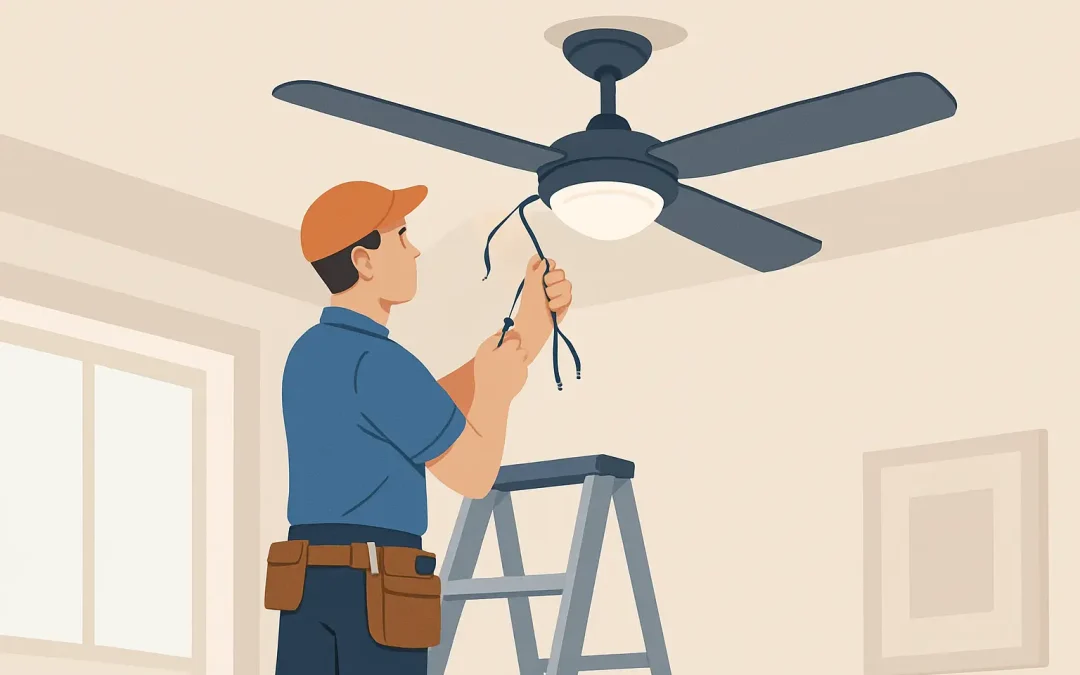
Yes, but you are not “just hanging a fan.” You are creating a new electrical point in the ceiling, which typically means adding a fan-rated electrical box, running cable to a power source, and adding a wall switch (or confirming an approved alternative control method). A ceiling fan is a moving, vibrating load, so it needs mechanical support and proper electrical connections.
If you’ve ever seen a fan wobble or heard a clicking box above it, that’s usually what happens when a fan is mounted to a standard light-duty box or directly into drywall. Fans must be mounted to a listed fan-rated box attached to framing or an approved fan brace.
The safest ways to power a fan when there’s no wiring
There are three common approaches. Which one is “best” depends on your home’s layout, attic access, existing circuits, and how you want to control the fan.
Option 1: Run a new cable from an existing nearby circuit
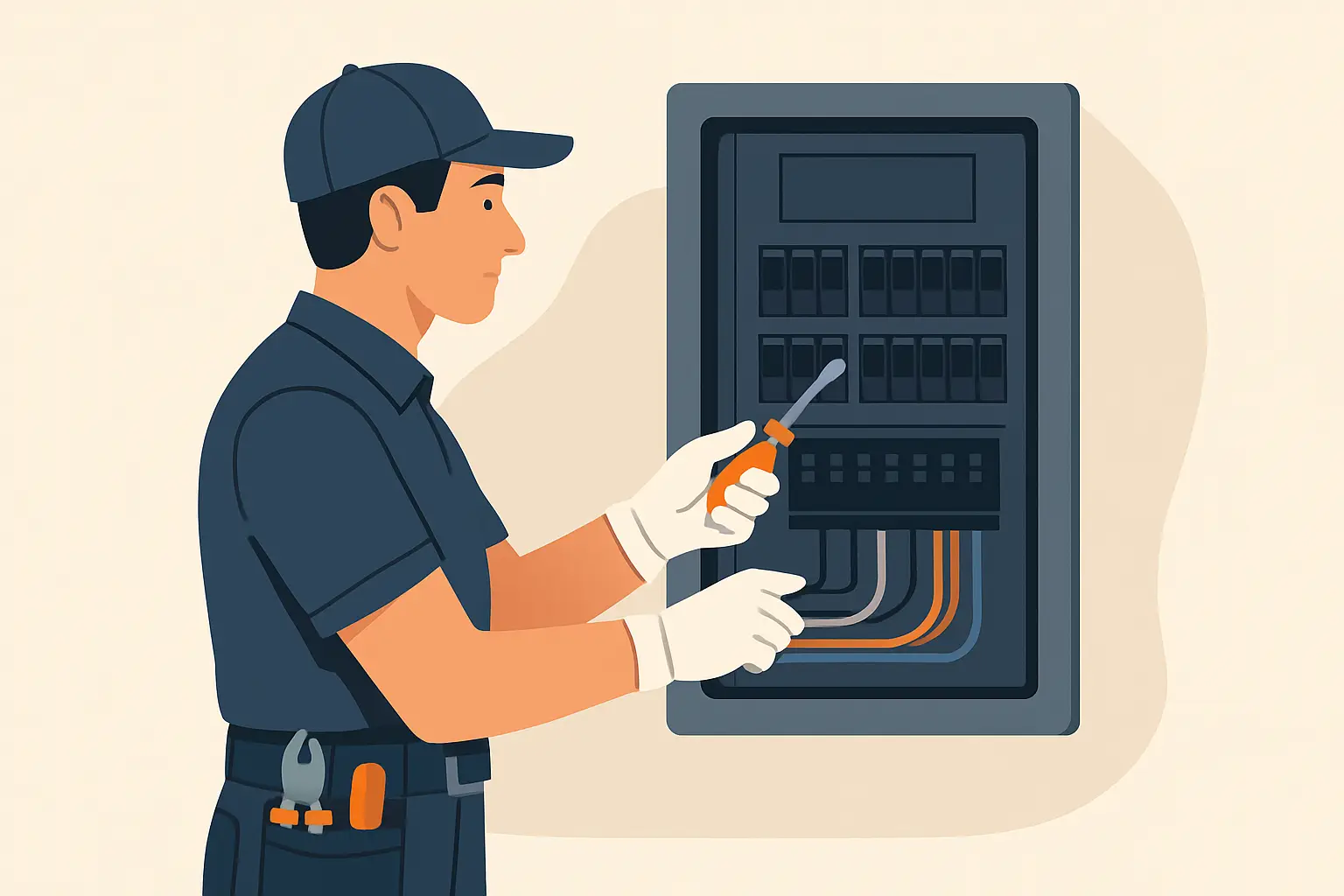
This is often the most cost-effective path when there’s attic access above the room or an unfinished space nearby (garage, crawl space, accessible soffit). An electrician identifies a suitable power source, runs new cable to the fan location, installs a fan-rated box, and brings a switch leg down to a wall switch.
The trade-off is that the existing circuit must have capacity. If the circuit is already heavily loaded (common with older homes that have fewer circuits), adding a fan can cause nuisance tripping or push the circuit beyond what’s appropriate. A proper load check matters.
Option 2: Run a brand-new dedicated circuit from the panel
If the room needs more electrical support anyway (space heaters, window AC units, home office equipment), or if local code and load calculations point that direction, a new circuit can be the cleanest long-term solution. This can also be the right move when your panel is modern and has room, but the existing branch circuits are maxed out or poorly routed.
The trade-off is cost and time. A new circuit can involve more drilling, fishing, and patching, especially in finished homes with limited access.
Option 3: Use an approved wireless control – but still run power
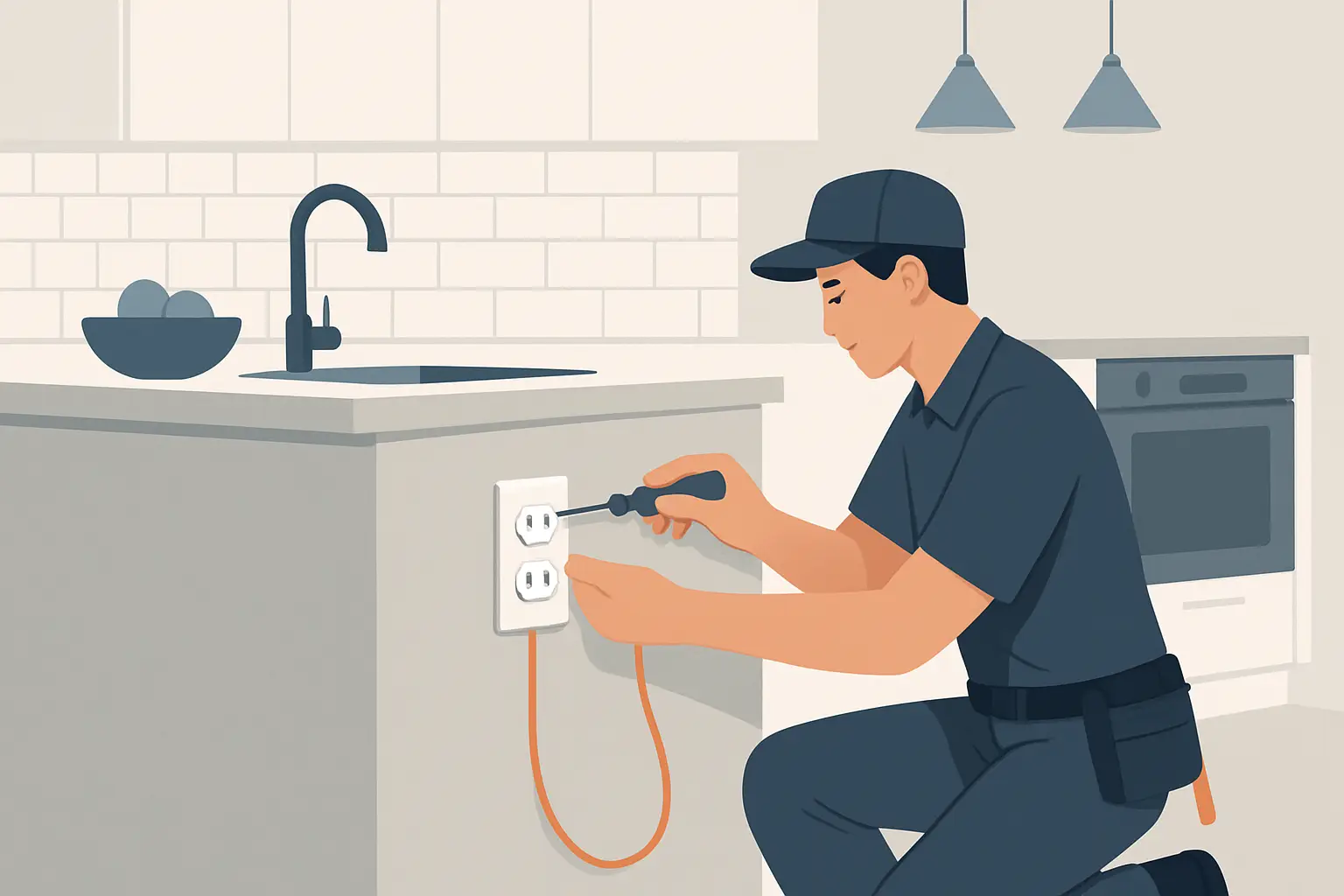
Homeowners sometimes ask if they can skip the wall switch and use only a remote. Even if you use a remote or smart control, the fan still needs constant power at the ceiling. You may be able to avoid opening a wall to add a switch drop in some cases, but you cannot avoid running a safe power feed to the fan.
Also, many people prefer a wall control for daily use. Remotes get lost, batteries die, and some fan electronics are picky about which controls they’ll accept.
What a code-compliant installation typically includes
When you install ceiling fan without existing wiring, the work usually includes a few non-negotiables.
First is a fan-rated ceiling box. It must be listed for ceiling-suspended fans and anchored properly. That could be directly to a ceiling joist or through an expandable fan brace designed for the span between joists.
Second is proper cable routing and protection. Cable needs to be run through framing in a way that meets code for securing, stapling, and protection from nails and screws. “Loose in the attic” is not a plan.
Third is proper grounding and connections. Fans typically include a grounding conductor, and the box itself must be grounded. Wire connectors must be sized correctly, conductors must be undamaged, and the fan canopy has to sit flush without pinching wires.
Finally, the fan must be supported independently of drywall. Drywall is not structural support for a ceiling fan, even if it feels solid.
How electricians decide where to pull power from
The most important part of this job happens before any cutting: choosing the right power source.
A common idea is, “Just tap the nearest outlet.” Sometimes that’s fine, and sometimes that outlet is part of a bedroom circuit that already feeds multiple rooms, bathroom loads, or a garage. Electricians verify what else is on that circuit, whether it’s a dedicated required circuit (like many bathroom receptacle circuits), and whether adding a fan is appropriate.
They also consider how you want the fan to behave. If you pull power from a switched source, you may end up with a fan that only works when another light is on. If you pull from a constant hot, you can set up independent control.
This is where clear communication matters. The “right” solution is the one that matches how you live in the space – and doesn’t create a mystery circuit you’ll regret later.
Where the work gets tricky in Inland Empire homes
Homes across Rancho Cucamonga and the Inland Empire vary widely. Some have generous attic access, and others have tight rooflines, vaulted ceilings, or finished second stories where fishing a switch leg becomes the hard part.
Vaulted ceilings are a common curveball. You might be able to mount the fan and run wiring to the location, but getting a clean wall switch installed without surface raceway can take planning. Sometimes the best path is routing through an adjacent wall cavity, closet, or existing lighting location.
Another common issue is older electrical systems with limited circuits. If your home has an older panel, mixed wiring methods, or signs of past DIY electrical work, it’s smart to address those risks before adding new loads.
Common DIY mistakes that cause real problems
People often try to simplify this project and accidentally create safety hazards. The most frequent issues we see are mounting to a non-fan-rated box, pulling power from an inappropriate circuit, and making unsafe splices hidden in the ceiling.
A ceiling fan draws less power than many appliances, so it can feel “low risk.” But the mechanical vibration and continuous use make it unforgiving. Loose connections can overheat, and improper mounting can turn into a falling hazard.
If you’re tempted to use an extension cord solution, a plug-in adapter, or any workaround that leaves cordage in the ceiling or across the room, stop. Those setups aren’t designed for permanent installation and can create fire and shock risks.
Permits, inspections, and what “to code” really means
Whether a permit is required can depend on the exact scope and local jurisdiction – for example, adding a new circuit vs. extending an existing one. Even when a permit isn’t required, code-compliant work still matters because it protects your home and reduces liability.
“To code” isn’t a buzzword. It means the fan is supported correctly, connections are made in accessible junctions, wire sizing and breaker sizing match, the circuit is protected properly, and the installation method is approved for the location.
If you plan to sell or refinance, clean electrical work also prevents the kind of inspection notes that delay deals.
What it usually costs to install a fan where no wiring exists
Pricing varies because the real cost driver is access and routing. A straightforward run through an open attic with a short switch drop is very different from a finished, vaulted ceiling with no easy path.
In practical terms, the variables are the distance to the power source, whether a new switch location is needed, whether drywall cutting and patch planning is involved, and whether the panel has capacity if a new circuit is required.
If you want a reliable quote, the fastest path is an on-site assessment. A good contractor will explain where power will come from, how the wiring will be routed, what will be opened up (if anything), and what the finished result will look like.
When to call a licensed electrician
If there’s truly no existing wiring in the ceiling, you’re beyond a simple fixture swap. Call a licensed electrician if you need a new circuit, if you’re not sure your panel can handle added load, if the ceiling is vaulted, or if you want the job done with minimal patching and zero guesswork.
If you’re in Rancho Cucamonga or elsewhere in the Inland Empire and want this handled safely with clear communication and dependable scheduling, Potter Electric Company Inc. can quote the work and walk you through the cleanest way to get power to that fan.
A ceiling fan should make a room more comfortable, not add a new problem to your electrical system – and the best installations are the ones you never have to think about again.