That “small” electrical problem rarely stays small when it starts at your breaker panel.
Maybe the lights flicker when the microwave kicks on. Maybe you smell something sharp and plastic near the garage. Or maybe you are adding an EV charger, a hot tub, or new HVAC and your electrician takes one look at the existing panel and says, “This needs to be replaced.”
A panel replacement is one of the most important electrical upgrades you can make, and it is not a DIY project or a “handyman special.” If you are searching for a licensed electrician for panel replacement, you are already thinking in the right direction – safety, code compliance, and long-term reliability.
When a panel replacement is the right call
Some homes can get by with a simple breaker swap or a small repair. Other situations call for a full panel replacement because the panel itself is no longer a safe or practical foundation for your electrical system.
Age is a big factor. Many Inland Empire homes still have older panels that were never designed for today’s loads. Even if you are not running a workshop, modern living stacks demand quickly: larger HVAC equipment, more kitchen appliances, home offices, added lighting, and growing use of electronics.
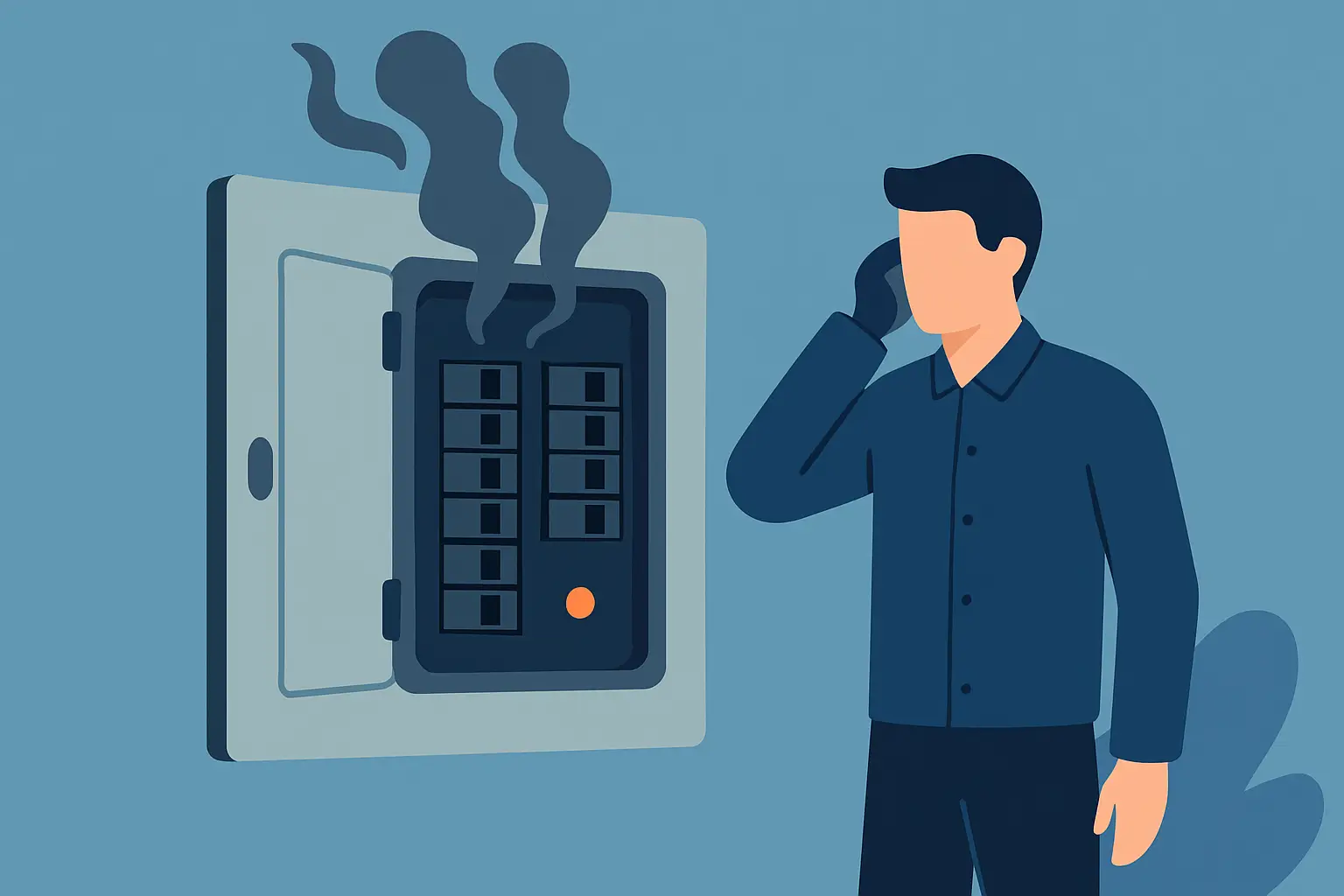
Physical warning signs matter just as much as age. Corrosion, heat damage, melted insulation, water intrusion, buzzing, or a breaker that will not reset are all red flags. So are scorch marks, a warm panel door, or that “electrical” smell. Those are not inconveniences – they are warning signals that the system may be operating outside safe limits.
Then there is the capacity issue. If you are constantly out of breaker spaces, using tandem breakers as a workaround, or relying on extension cords because the circuits are overloaded, the panel may be undersized for the property’s real needs.
Why “licensed electrician for panel replacement” is not just a search term
A panel replacement is the hub of your electrical system. It involves service conductors, grounding and bonding, load calculations, utility coordination, permitting, and a final inspection. One mistake can create shock risk, fire risk, or expensive damage to equipment.
A licensed electrician is accountable to state standards and local code requirements. That matters because panel work has to meet strict rules about clearances, conductor sizing, grounding, labeling, and how circuits are landed and protected.
It also matters for insurance and resale. If an unlicensed person does work that leads to a loss, you can end up with a claim dispute. And when you sell, buyers and inspectors often flag unpermitted electrical changes – especially panel work.
If you want the job done safely and cleanly the first time, hiring a licensed electrician for panel replacement is the shortest path to a result you can trust.
What a good panel replacement includes (and what it should not)
Panel replacement is not simply “swap the box and go.” A quality job starts with planning and ends with documentation and a clear explanation of what changed.
A licensed electrician should begin by looking at your actual load needs. That includes major appliances, HVAC, any planned upgrades (EV charging is a common one), and how the home or building is used. The goal is to size the panel so you are not paying twice later.
During the replacement, your electrician should address the fundamentals: proper grounding and bonding, correct breaker types, clean wire management, and correct labeling. Labeling is not cosmetic – it is what lets you shut off the right circuit fast in an emergency and makes future troubleshooting quicker and less expensive.
You should not see “creative” shortcuts like doubled-up conductors under a lug that is not rated for it, mixed breaker brands that do not belong in the panel, or missing knockout fillers. These details are exactly what inspectors look for because they correlate with real-world failure points.
Permits, inspections, and why they protect you
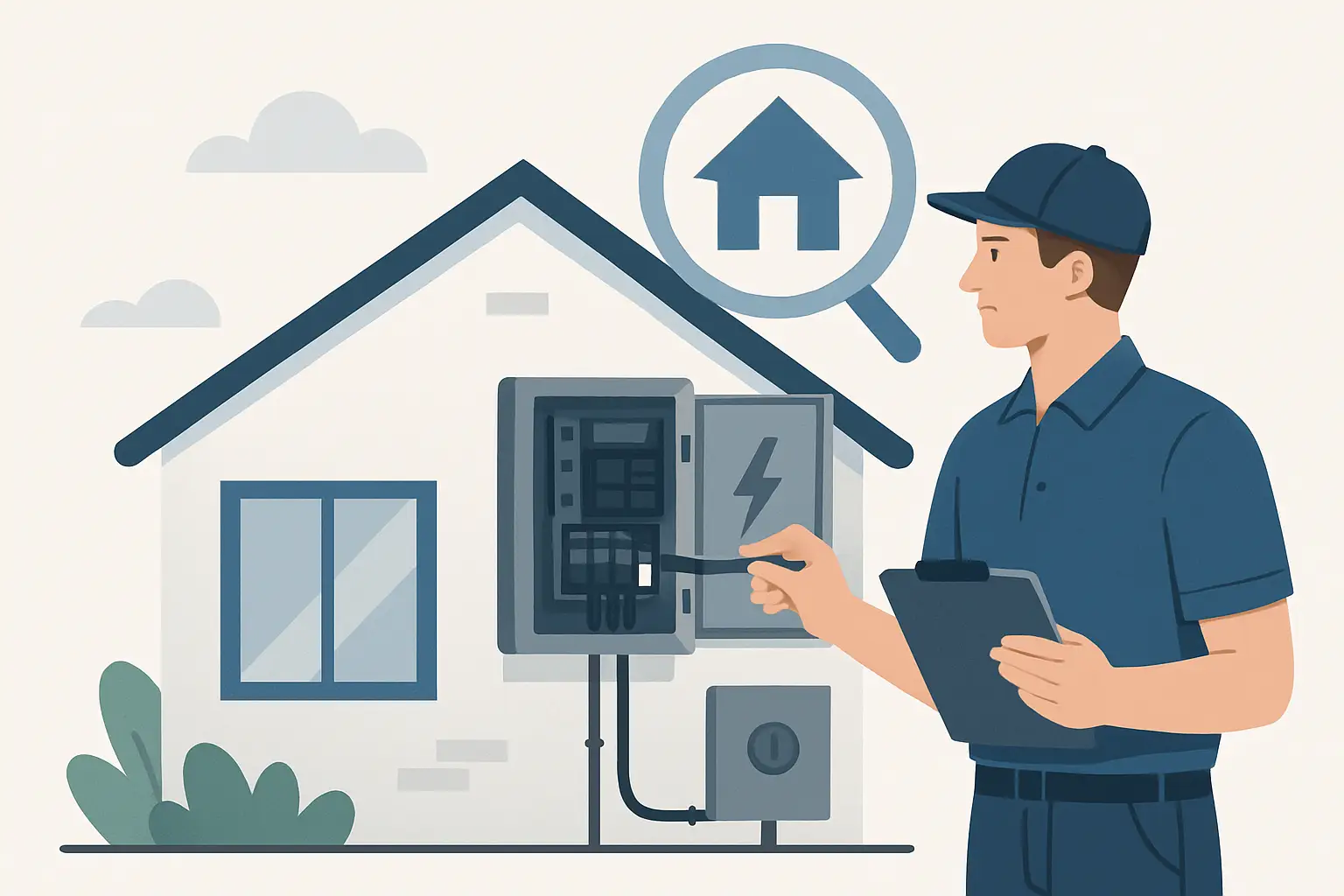
In Rancho Cucamonga and across the Inland Empire, panel replacements typically require permits and inspections. Some property owners worry a permit slows things down. In practice, the permit is your protection. It creates a paper trail that the work was done to code, and it adds a second set of eyes on the most critical parts of the installation.
A licensed contractor should handle the permitting process and coordinate with the utility when a service disconnect or meter work is involved. That is especially important when timing matters for businesses that cannot afford extended downtime.
If someone offers to do a panel replacement “without permits to save you money,” that is a decision that can become very expensive later.
How long it takes and what downtime looks like
Most panel replacements are completed in a day, but the exact timeline depends on the service configuration, the condition of existing wiring, and whether upgrades are needed to bring things up to current code.
Power will be off during the changeover. For a typical home, that means planning around refrigeration, internet, medical devices, and work-from-home schedules. For a commercial space, it often means scheduling the work during off-hours or coordinating a planned outage window.
A service-forward electrician will talk through the sequence ahead of time: when the shutoff happens, what stays powered (usually nothing), and when you can expect circuits to be restored. Clear communication is not a “nice to have” here – it is how you avoid surprises.
Costs: what drives panel replacement pricing
Panel replacement cost is not one-size-fits-all. Two homes can both “need a new panel,” but the scope may be very different.
The biggest pricing drivers are panel amperage, the number of circuits, whether the service needs to be upgraded, and the condition of existing conductors and grounding. If the existing installation has significant code issues (like improper grounding, damaged feeders, or unsafe splices), correcting them is part of doing the job safely.
There is also the question of future-proofing. Adding a larger panel or making space for an EV charger circuit may cost more upfront but can save money when you expand later.
Be cautious with quotes that seem dramatically low. Panel work requires quality materials, experienced labor, and time for proper testing and labeling. A bargain price often means something is being skipped.
Choosing the right electrician: what to ask
If you are comparing electricians, you do not need to become an expert in the National Electrical Code. You just need to ask the questions that reveal how the contractor operates.
Start with licensing and insurance. Ask if they will pull the permit. Ask what panel brand and breaker types they plan to install and why. Ask if they will perform a load calculation or at least discuss your current and planned electrical demands.
Ask how they handle jobsite cleanliness and protection of your property. Panel replacement can involve drilling, removing old equipment, and moving circuits around. A professional crew treats your home or workplace like it matters.
Finally, ask what testing is done after the replacement. A careful electrician checks circuit behavior under load, confirms proper grounding and bonding, verifies breaker sizing, and makes sure critical circuits are stable.
Common “it depends” situations in older Inland Empire homes
Many Rancho Cucamonga and Inland Empire properties have electrical histories – additions, garage conversions, remodels, or DIY changes over decades. That can affect what a panel replacement entails.
Sometimes the panel can be replaced cleanly with existing branch circuits that are in good shape. Other times, the electrician finds damaged conductors, mislabeled circuits, shared neutrals that need attention, or grounding that does not meet today’s standards.
This is where transparency matters. A trustworthy electrician will show you what they found, explain the risk in plain language, and give you options when there is more than one code-compliant path.
A safer panel also supports modern upgrades
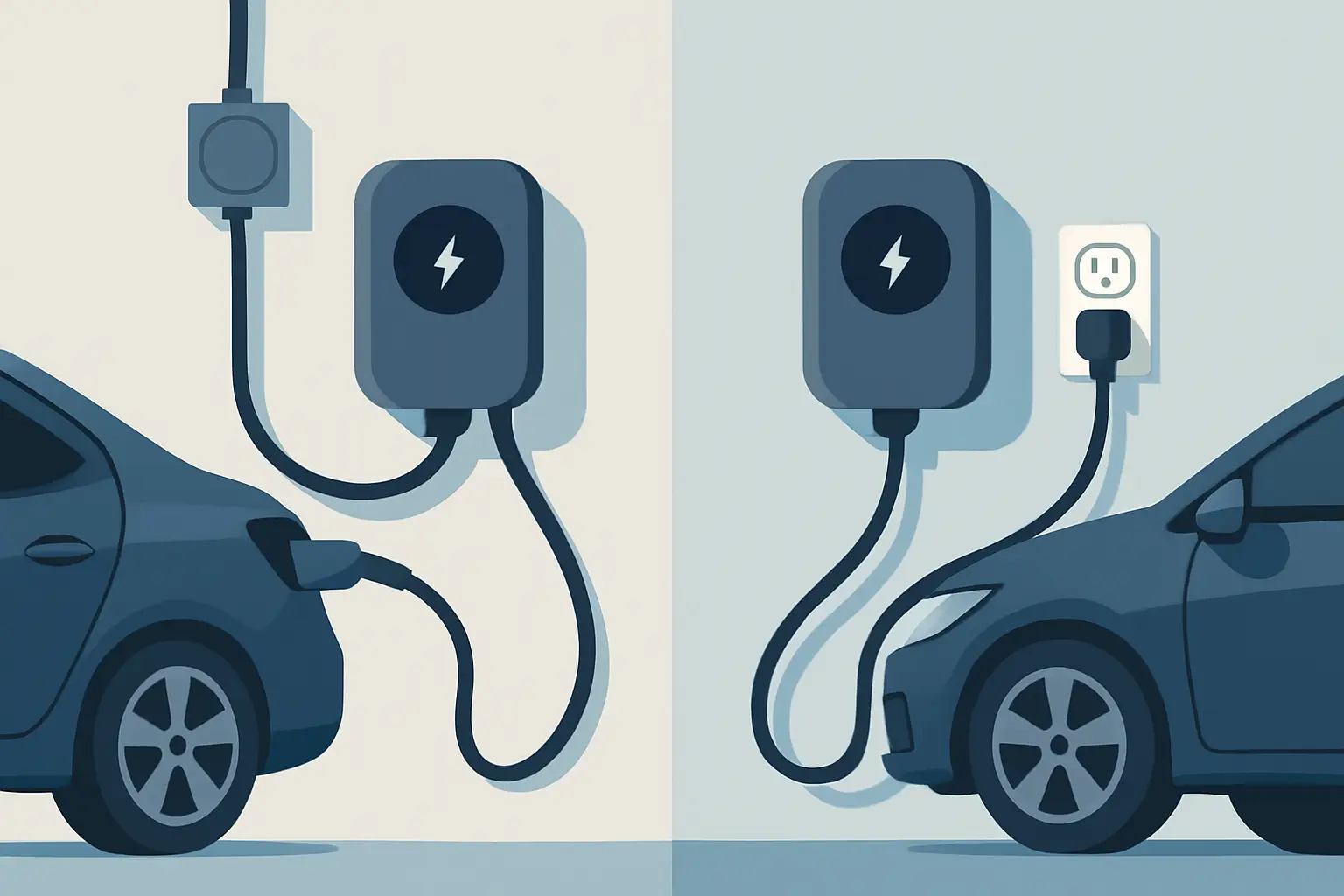
Panel replacement is often triggered by a specific need: adding an EV charger, installing a new heat pump, upgrading to an electric range, or adding power for a home office. Those projects can be straightforward when the electrical infrastructure is ready.
A modern panel with the right capacity and properly protected circuits reduces nuisance tripping, supports stable voltage, and gives you room to grow. It also makes troubleshooting faster because circuits are organized and labeled.
If you are planning electrification upgrades, it is smart to think of the panel as the foundation. Doing it right once keeps future projects simpler.
Local help that keeps the process simple
If you want a licensed electrician for panel replacement in Rancho Cucamonga or the broader Inland Empire, the best experience usually comes from a contractor who treats the job like a managed project: clear scheduling, clean execution, permit handling, and straight answers.
At Potter Electric Company Inc., the focus is safety-first workmanship with clear communication and dependable scheduling – the kind of service that matters most when your home or business will be without power during the changeover.
If your panel is showing warning signs or you are planning a major electrical upgrade, the next step is simple: schedule an on-site evaluation, ask questions, and choose the solution that makes your electrical system feel boring again – quiet, reliable, and safe.