That split-second dim or flicker when the AC kicks on or the dryer starts can feel small – until it keeps happening. In many Inland Empire homes and businesses, flickering is the first visible sign that an electrical system is working harder than it should. Sometimes it’s normal startup draw. Other times it’s a loose connection or an overloaded circuit that deserves attention now, not later.
Here’s how to tell the difference, what you can safely check, and what a licensed electrician should troubleshoot when flickering lights when appliances run becomes a pattern.
What causes flickering lights when appliances run?
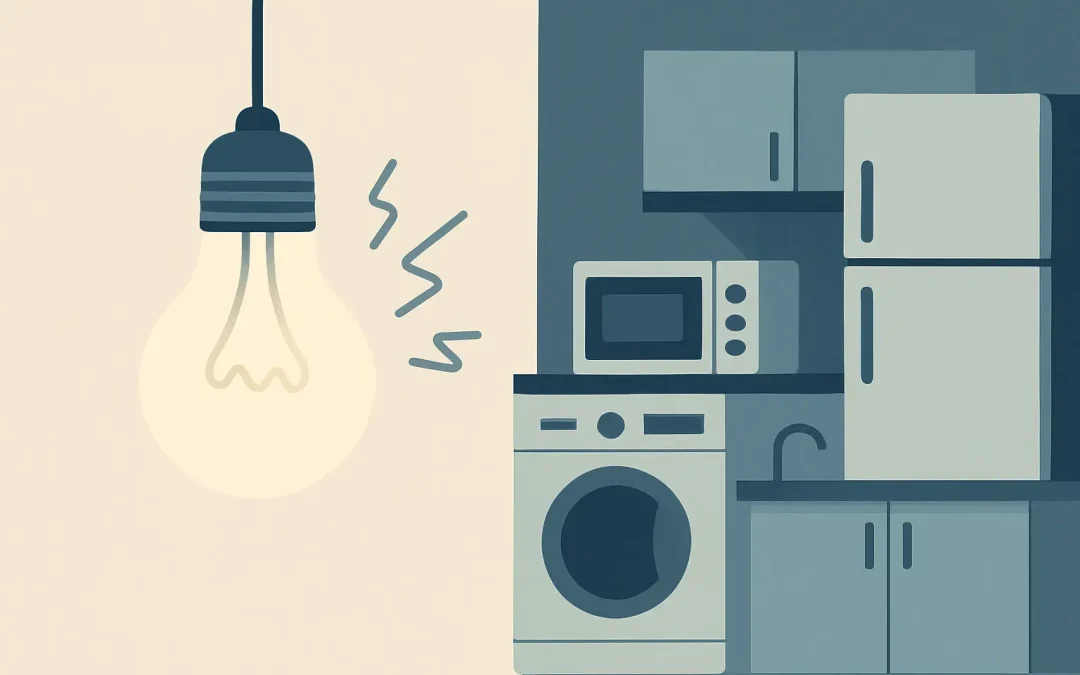
When a motor-driven appliance starts (air conditioner, refrigerator, garbage disposal, pool pump, dryer), it pulls a brief surge of current called inrush. That surge can cause a temporary voltage drop on the circuit, which shows up as lights dimming or flickering for a moment.
If the system is healthy and properly sized, you’ll usually see a quick, mild dip and then everything stabilizes. If the flicker is frequent, stronger than it used to be, or happens with multiple appliances, the issue is often that the electrical path has extra resistance somewhere or the circuit is undersized for the load.
In plain terms: your lights are reacting to a momentary power “strain.” The goal is to figure out whether it’s a normal strain or a warning sign.
Normal vs not normal: what to watch for
A single, brief flicker when a big appliance starts can be normal, especially in older homes or on long circuit runs. But the details matter.
A quick dim that lasts less than a second, only when one specific motor starts, and doesn’t worsen over time usually points to normal inrush current.
Flickering that repeats, lasts several seconds, happens when multiple different appliances run, or is noticeable across the whole home or suite is more concerning. So is flickering that comes with other symptoms like buzzing, warm switch plates, a burning smell, or breakers that trip.
If you run a business, also pay attention to anything that impacts sensitive equipment. Computers, POS systems, networking gear, and LED drivers can react badly to voltage fluctuations. Even if the lights are the only obvious symptom, the underlying cause can still be affecting other loads.
The most common culprits (and why they matter)
Shared circuits and overloaded lighting runs
One of the simplest explanations is that lights and a heavy appliance are on the same branch circuit. When the appliance starts, it briefly drags voltage down on that circuit and the lights show it.
This is especially common in garages, laundry areas, older kitchens, and tenant improvements where circuits were extended over time. The fix may be as straightforward as separating loads onto dedicated circuits, but that requires correct breaker sizing, wire sizing, and code-compliant routing.
Loose neutral connections
A loose neutral is a big deal. It can cause lights to flicker, brighten unexpectedly, or fluctuate when loads change. In some cases, one side of the electrical service can drift high while the other drifts low, depending on what’s running.
Loose neutrals can occur in a panel, at a device, in a junction box, or at the service connection. This is not a “wait and see” scenario. It can damage electronics and create overheating at the connection point.
Worn breakers or poor panel connections
Breakers don’t just trip. They also serve as part of the current path. A breaker that’s worn, a bus bar with corrosion, or a poor connection where the breaker clips to the bus can create resistance. Resistance creates heat, and heat creates more problems.
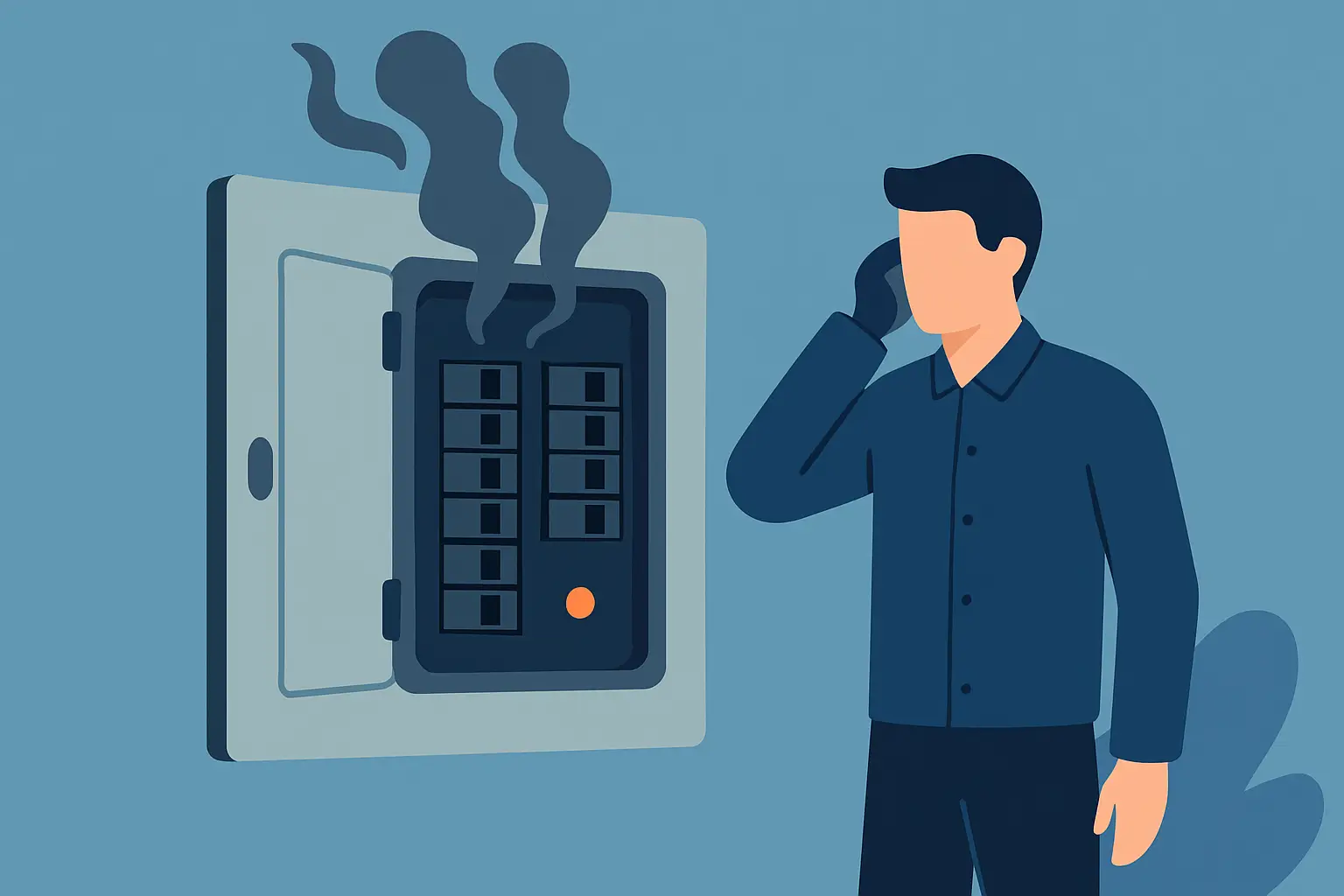
If flickering is accompanied by crackling at the panel, a hot panel cover, or a breaker that feels warmer than others, it’s time for a professional inspection.
Utility-side voltage drop
Sometimes the problem isn’t inside your building. A loose connection at the meter, a failing transformer, or a long service run can contribute to noticeable voltage dips when big loads start.
A good electrician can help you determine whether you’re seeing a utility supply issue versus an internal wiring issue. This matters because the solution and responsibility may be different.
LED lighting and incompatible dimmers
LEDs are efficient, but they are also more sensitive to voltage changes and control gear issues. If flickering is mostly in LED fixtures or only on dimmed circuits, you might be dealing with a compatibility problem rather than a whole-home power issue.
That said, if the flicker clearly lines up with appliance startup, treat it as an electrical load and voltage-drop question first. Upgrading a dimmer won’t fix a loose neutral.
Safety-first checks you can do (and what not to do)
You can gather useful information without opening a panel or touching wiring. Start with simple observations.
Notice whether the flicker happens on one room’s lights or throughout the building. Check if it correlates to one appliance (like the HVAC) or multiple loads. Try turning off non-essential loads and see if the flicker reduces when the appliance starts. If you have a plug-in lamp, test it on different outlets to see whether the flicker follows a specific circuit.
Also, look for patterns: does it happen more in the evening when more loads are running, or when the AC and dryer overlap, or when the dishwasher heater turns on? That pattern is often the clue.
What not to do: don’t remove the electrical panel cover, don’t tighten service conductors, and don’t “upsizing” a breaker to stop nuisance trips. A larger breaker on the same wire can overheat the wiring in the walls before the breaker trips.
If you smell burning, hear sizzling, see scorch marks, or a breaker trips repeatedly, shut off the affected circuit and call for service.
How an electrician diagnoses the real cause
A proper diagnosis is part electrical science, part local experience. The goal is to measure and inspect, not guess.
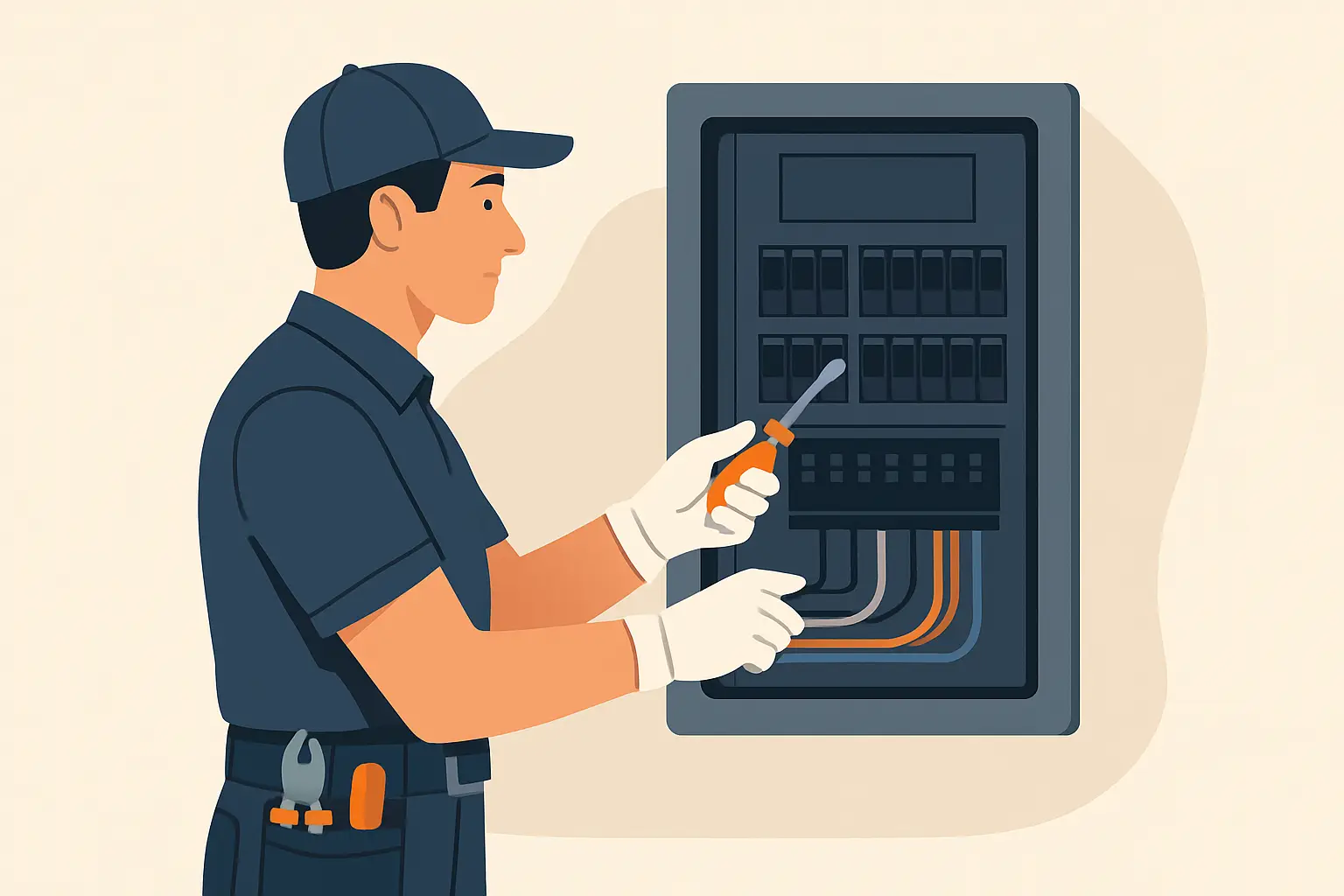
A licensed electrician will typically check for voltage drop under load, verify neutral and ground integrity, and inspect terminations at the panel and at affected devices. They may also evaluate whether the appliance has an abnormal startup draw (for example, an aging compressor or motor can pull higher inrush current than normal).
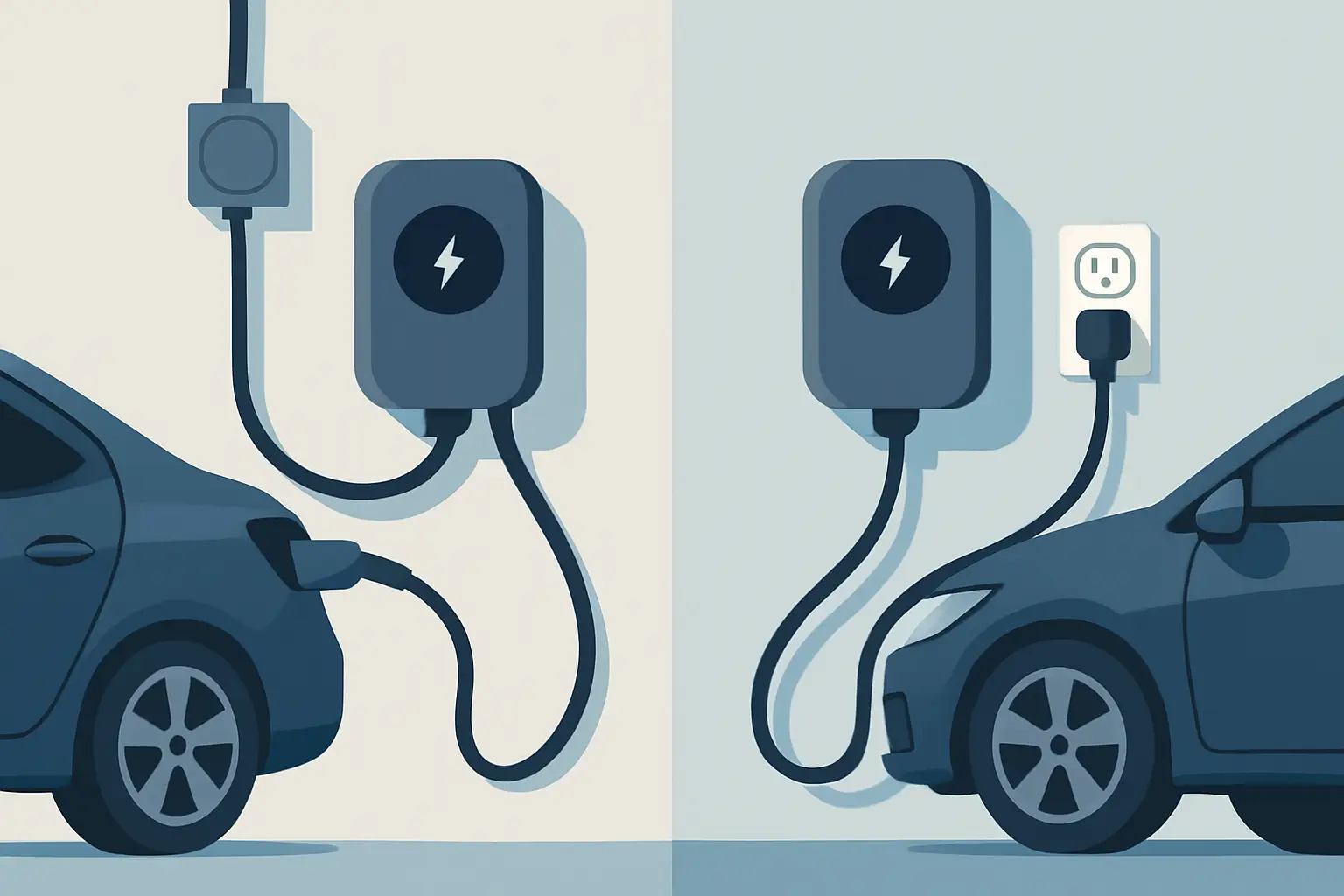
In many cases, the fix is not dramatic, but it needs to be precise: re-terminating a neutral, replacing a worn breaker, correcting an overloaded circuit, or adding a dedicated circuit for a high-demand appliance. If the panel is undersized for modern loads or showing signs of deterioration, a panel upgrade may be the safest long-term solution, especially for households adding EV charging, newer HVAC, or more kitchen loads.
Common fixes (and the trade-offs)
If the issue is a shared circuit, adding or rerouting circuits can eliminate the flicker and reduce nuisance trips. The trade-off is that it requires access for wiring runs and may involve some drywall work depending on the layout.
If the issue is a loose connection, the fix can be quick once located, but finding it requires careful inspection because loose connections are not always visible from the outside. The upside is that correcting it improves safety immediately.
If LEDs are the only lights flickering, a lighting-focused solution like compatible dimmers or updated drivers may resolve it. The trade-off is that it won’t address broader voltage drop issues if they exist.
If the root cause is utility-related, you may need coordination with the power company. A good contractor can document what’s happening and help you navigate next steps.
When to call now vs schedule soon
Call now if you see repeated flickering paired with buzzing, burning odors, warm outlets or switches, sparking, or breakers that won’t reset. Those are signs of overheating or arcing risk.
Schedule soon if the flickering is consistent and spreading to more areas, if you’ve recently added higher loads (EV charger, new HVAC, new appliances), or if your panel is older and you’re noticing other performance issues like frequent trips or limited breaker space.
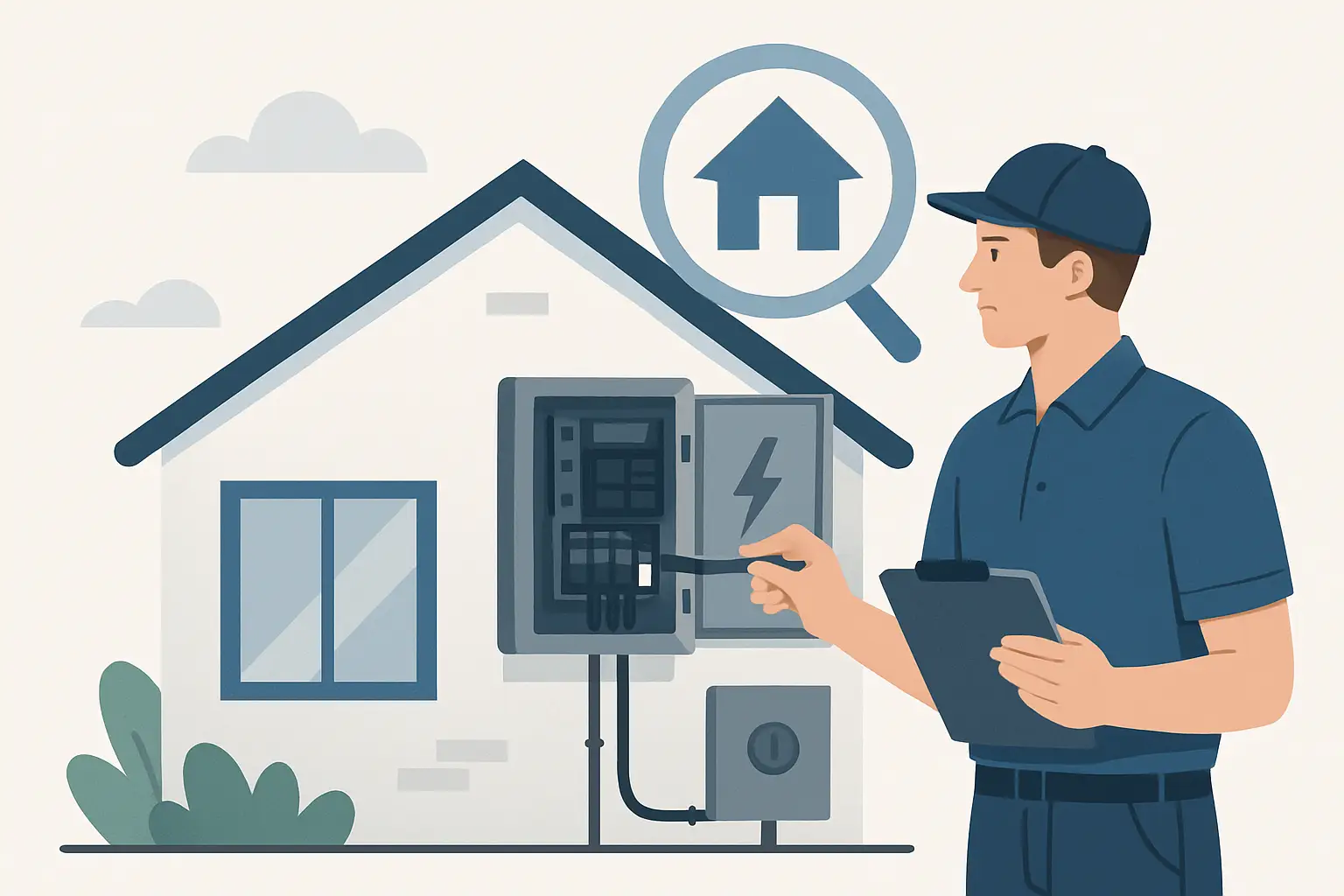
For homes and businesses in Rancho Cucamonga and across the Inland Empire, a straightforward electrical inspection can usually pinpoint whether you’re dealing with normal inrush behavior or a problem that needs correction. If you want a safety-first diagnosis with clear explanations and clean, code-compliant work, you can book an appointment with Potter Electric Company Inc..
A quick reality check for older homes and growing loads
Many properties were wired for a different era: fewer kitchen appliances, smaller HVAC systems, no EV charging, and far fewer plug-in electronics. When modern loads stack onto older circuits, small symptoms like flickering are often the first hint that the system needs a smarter layout or additional capacity.
The goal is not to “chase flickers” forever. It’s to make sure your electrical system is stable, safe, and sized for how you actually live or operate today.
A helpful closing thought: if your lights are trying to tell you something every time an appliance starts, it’s worth listening before the message turns into a tripped breaker, damaged equipment, or a preventable safety hazard.